

Rug tufting is taking over social media. You see giant frames, huge industrial shears, and people working in massive, sun-drenched lofts. It looks like you need a dedicated garage or a warehouse to even start. Many people think they can't make rugs because they live in a small apartment with thin walls and no extra rooms.
However, you don't need a commercial studio to be a tufter. With a few smart choices about your gear and a solid plan for noise control, you can build a professional-level setup in a corner of your living room.
Setting Up Your Small Space Tufting Station
Turning a small home into a workspace requires a shift in how you view your furniture. Instead of a permanent construction zone, think of your setup as something that can be assembled and tucked away.
Find the Best Spot in Your Home
When looking for a spot, don't just look for the biggest empty floor area. You need to prioritize natural light and air flow. Tufting involves a lot of detail work, and good lighting helps you see the lines on your cloth clearly.
More importantly, you need to be near a window or a balcony door. This helps clear out the fine yarn dust that fills the air and provides a vent for when you apply glue later. A corner near a window is better than a large, dark hallway.
Pick a Compact Frame for Easy Storage
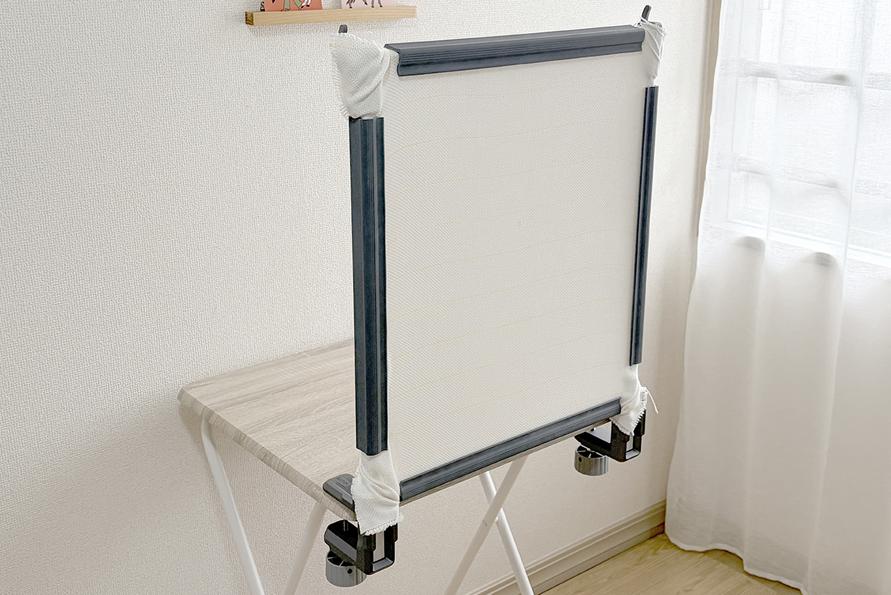
Big frames are great for floor rugs, but they are a nightmare to store in a small apartment. For beginners, a tabletop tufting frame measuring about 28x28 inches is the best choice. This size allows you to make decent-sized rugs or several small wall hangings without taking up an entire wall.
If you want to save even more space, look into a nail-free tufting frame or a model that uses C-clamps. These allow you to attach the rug tufting frame directly to your dining table or a sturdy desk. When you finish for the day, you simply unscrew the clamps and slide the frame under your bed or behind a sofa. This "clamp-on" method keeps your floor clear and prevents your apartment from looking like a construction site 24/7.
Reducing Noise to Keep Your Neighbors Happy
Neighbors are the biggest hurdle for apartment tufters. The sound of a tufting gun is not just a hum, but it's a mechanical vibration that can shake the table and the floor, sounding like a jackhammer to the person living below you.
Stop Vibrations at the Source
To stop this, you need to absorb the shock before it hits the building's structure. Place thick, high-density rubber gym mats under the legs of your tufting table. For extra protection, put a smaller piece of rubber or a folded towel between your tufting frame and the table where they meet. This creates a "buffer" that soaks up the energy from the gun. If the table doesn't shake, the sound won't travel as far.

Work During Respectful Hours
Even with padding, you should follow the "9-to-5" rule. Try to do your tufting during hours when people are usually at work or when the general noise of the city is higher. Avoid tufting late at night or very early in the morning when the building is silent.
Another tip is to check the speed setting on your gun. Many guns have a dial at the bottom to adjust the motor speed. Running the gun at a slightly lower speed reduces the volume of the mechanical clicks. It might take a little longer to fill in your shapes, but it makes the process much more neighbor-friendly.
Keeping Your Air Clean from Yarn Dust and Glue
Small rooms trap particles quickly. When you tuft, the needle moves in and out of the fabric thousands of times, shedding tiny bits of yarn into the air. If you don't manage this, you'll end up with a layer of colorful dust on every surface and in your lungs.
Trap Tiny Fibers Before They Spread
Tufting naturally creates some yarn dust and lint, which can accumulate quickly in a cozy apartment. To keep your room feeling fresh, consider running an air purifier near your frame to catch floating fibers before they settle.
For a more comfortable experience, wearing a light dust mask during long tufting sessions is a helpful habit. It keeps you from breathing in loose fuzz so you can fully enjoy your craft. It is also smart to keep a vacuum with a hose attachment nearby—giving the floor and the back of your canvas a quick sweep after every color change helps keep your living space tidy and dust-free.
Choose Safe Adhesives for Indoor Use
Most professionals use heavy-duty adhesives to secure the yarn. These glues are often full of chemicals that give off strong fumes, which are dangerous in a small space without industrial ventilation.
For apartment dwellers, look for low-VOC (Volatile Organic Compounds) latex or PVA variants. These versions have much less odor and are safer for indoor use. They might take a bit longer to dry, but they won't leave your entire home smelling like a chemical plant. Always open your windows wide and use a fan to push the air outside while the glue is wet.

Using Vertical Storage to Save Floor Space
In an apartment, the floor is your most valuable resource. If you start stacking yarn cones on the ground, you will run out of walking space in a single afternoon. You have to look up.
Store Tools on the Wall
A wall-mounted pegboard is a game-changer. You can hang your yarn cones on hooks, which keeps the colors visible and organized. It also provides a place to hang your tufting gun, heavy fabric shears, and duckbill scissors. By moving these items to the wall, your workspace stays tidy, and you won't accidentally step on an expensive tool.
Tangling-Free Ways to Feed Your Yarn
Tangled yarn is a common reason for tufting guns to jam or tear the fabric. In a tight space, it's hard to have yarn sitting on the floor behind you. Instead, try feeding the yarn from above. You can install a simple screw-eye hook in the ceiling or attach a tall vertical rod to your tufting frame. By pulling the yarn from a high point, it feeds into the gun smoothly and stays out of the way of your feet and chair.

Starting Your Apartment Tufting Studio
Tufting fits into a small, quiet life if you plan well. Using a compact tufting frame keeps your furniture functional, while vibration mats keep neighbors happy. Prioritizing fresh air and vertical storage makes a 1-bedroom apartment feel like a pro workshop. You don't need a huge warehouse to create beautiful art. With these smart habits, you can master the craft right from your own living room.
FAQs
Q1: Is a tufting gun too loud for apartment neighbors?
It can be, but you can fix it. Most of the "noise" is actually vibration. If you use rubber mats under your table and avoid tufting against shared walls, it sounds like a muffled sewing machine. Just talk to your neighbors and find out when they are most bothered by noise.
Q2: How much space do I really need for a home studio?
You only need about a 4-foot by 4-foot area to work comfortably. Using a nail-free tufting frame that attaches to a desk you already own is the best way to save space. When the frame is put away, your "studio" disappears.
Q3: How do I stop yarn dust from getting everywhere?
The best way is to stop it at the source. Use an air purifier right next to your frame and vacuum your workspace every single time you tuft. Covering nearby furniture with a light sheet while you work can also make cleanup much faster.


